Wednesday, August 4, 2010

Todai-ji Temple - Nara

The centrepiece of Nara is the Great Buddha (Daibutsu), housed in Todai-ji Temple, and is said to be Japan's single most impressive sight (so true!). Todai-ji Temple is designated as a World Heritage Site by the UN and Todai-ji's Daibutsu-den (Hall of the Great Buddha) is the largest wooden building in the world. The present Daibutsu, recast in the Edo period, stands over 16m (52.5ft) high and consists of 437 tonnes of bronze and 130kg of gold.

For ¥100 we discovered our fortune by shaking a bamboo canister until a wooden stick with a number came out; the number corresponds to a piece of paper; our paper reads, "[General Explanation] Your fortune contains a sign of success as if a dragon is looking for his way to the sky. [A Legal Case] Things will be unfavorable to you only in the beginning. [Trade] Good in selling. So-so in buying. [Travel] It is recommendable for you to take travel, but be careful during your travel. [Competition] You will eventually win but it will take time."

Gate around Todai-ji Temple.

Todai-ji Temple.


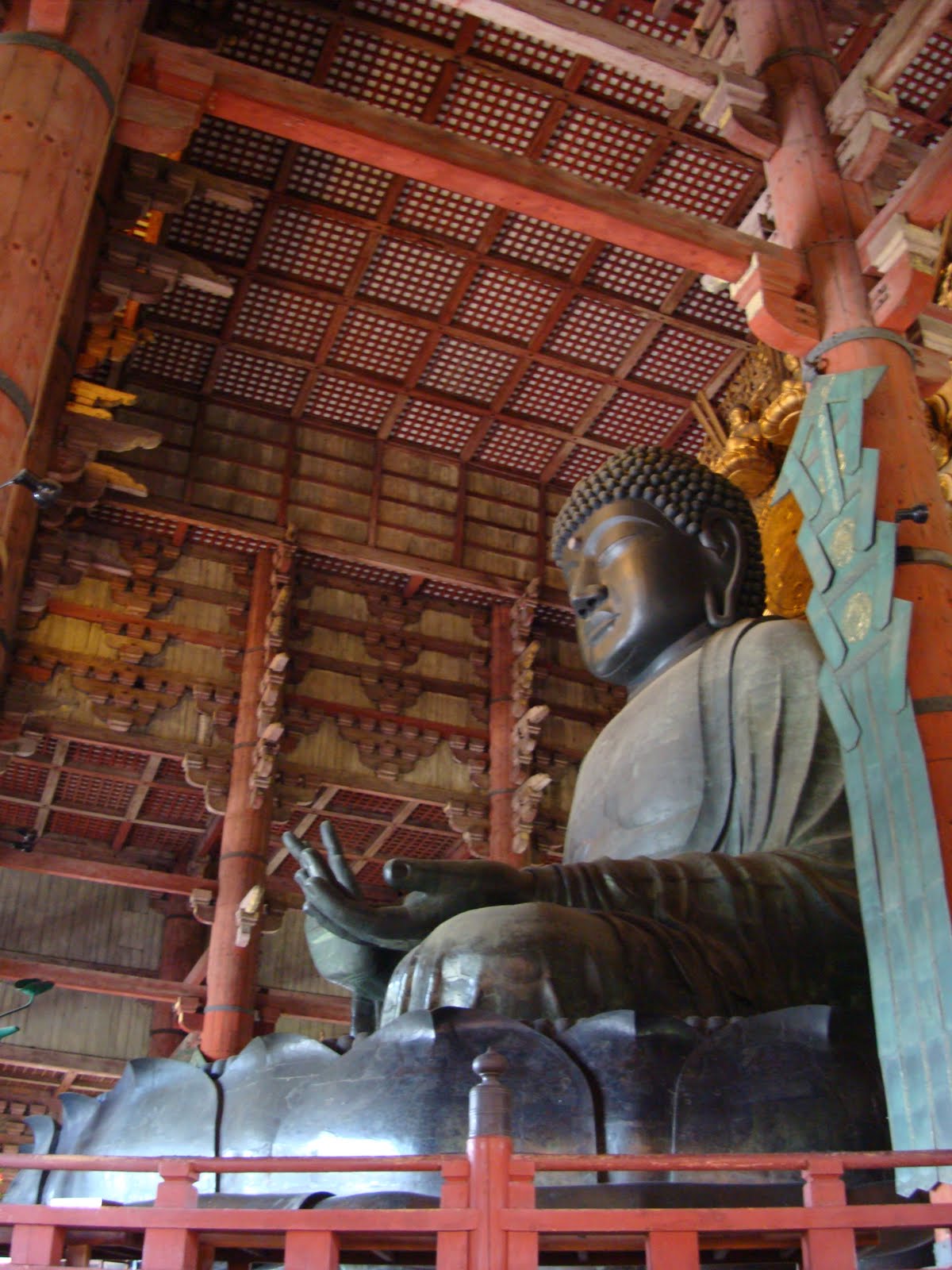
The Great Buddha (Daibutsu).


Nio guardians. These fierce-looking restored wooden statues were carved in the 13th century by the sculptor Unkei and are considered some of the finest wooden statues in all of Japan.


This wooden column has a hole through its base. Popular belief maintains those who can squeeze through the hole, which is exactly the same size as one of the Great Buddha's nostrils, are ensured of enlightenment.

I think I could of fit through...

Deer - Nara

Ken can vouch the deer in the park were my favorite attraction, hehe! The park is home to about 1,200 deer, which in old times were considered to be messengers of the gods. These free-roaming, sacred, deer are one of the symbols of Nara and today enjoy the status of national treasures. We purchased some special biscuits called shika-sembei from vendors to feed the deer. The deer were very pushy when asking for hand-outs (i.e., biting and tugging at Ken's shirt). Ken thought the deer biscuits smelled bad, so I ended up carrying them throughout the park. :P


Funny sign warning people of the deer.


DEER ATTACK!


Me with Sento-kun, the official mascot character for the Commemorative Events of the 1,300th Anniversary of the Nara-Heijokyo Capital.

Kasuga Grand Shrine - Nara

Kasuga Grand Shrine is designated as a World Heritage Site by the UN. This shrine is famous for ~1,000 bronze lanterns and ~2,000 stone lanterns, which are all lit twice a year.

Heading to the shrine...

feeding deer along the way.

Kasuga Grand Shrine.


Hotel Monterey Kyoto - Hotel #5

We moved from the ryokan to the Hotel Monterey Kyoto, which, like the other Hotel Monterey, was very nice.


The lobby was way posh!


Purple floors!

Nijo Castle - Kyoto

Nijo Castle (Nijo-jo) was built in 1603 as the official Kyoto residence of the first Tokugawa Shogun, Ieyasu. The entire site is a World Heritage Site and of unique historical significance. To safeguard against treachery, Ieyasu had the interior fitted with 'nightingale' floors (intruders were detected by the squeaking boards) and concealed chambers where bodyguards could keep watch. When walking through the corridors of Ninomaru Palace we heard the squeaks, it was neat!

Ken at the Momoyama-era Kara-mon gate.

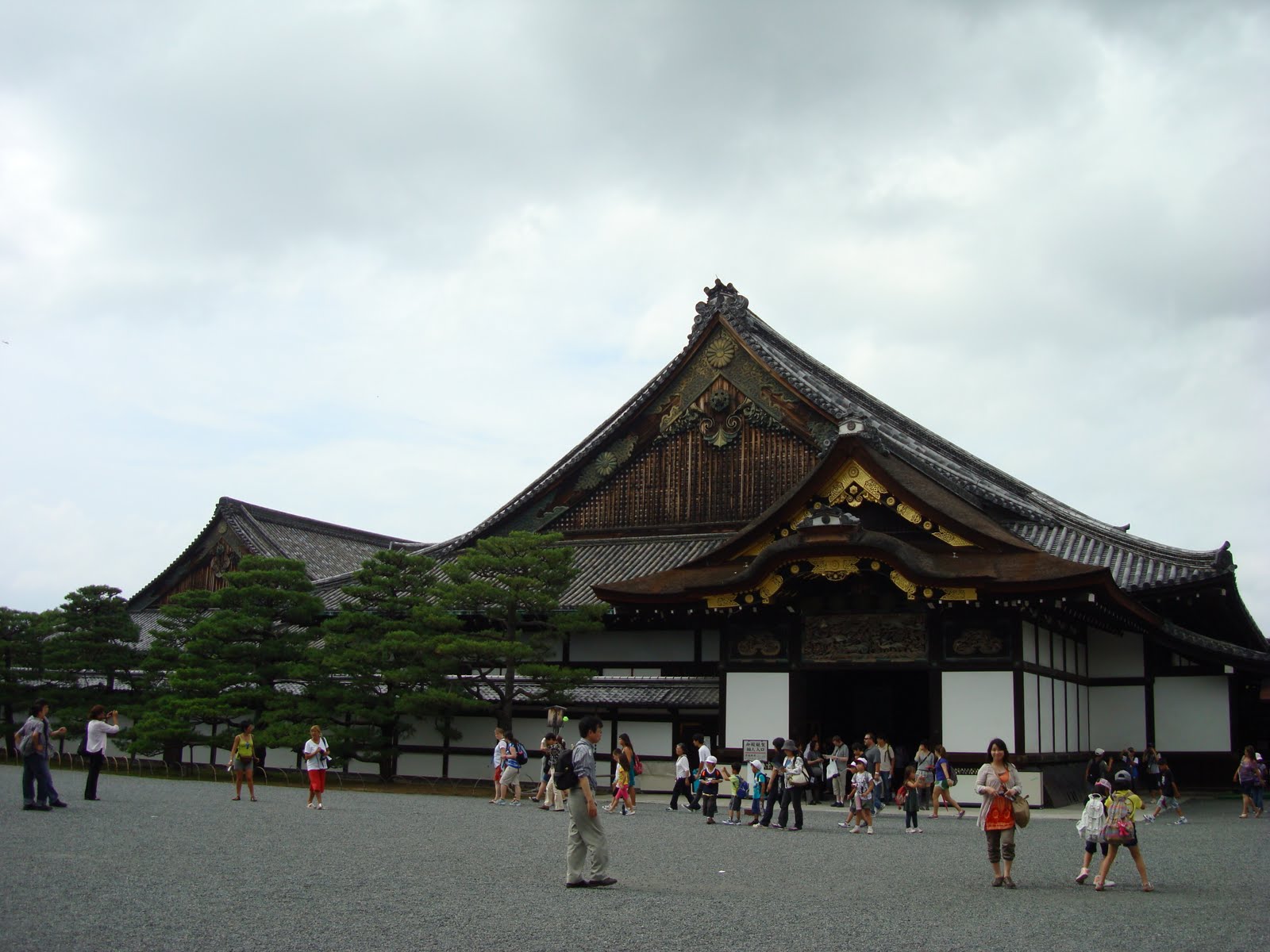
Ninomaru Palace (National Treasure). It has 33 rooms and over 800 tatami mats (straw mats used in traditional Japanese rooms).


When entering a palace in Japan you remove your shoes; areas with numbered cubbies for your shoes were common.


Honmaru Palace (Inner Palace) was added to the castle complex in 1626 upon the orders of the third Tokugawa Shogun, Iemitsu.